Project Management Software 2026: ClickUp vs. Notion vs. Monday
Choosing the right project management software in 2026 is the difference between a productive engine and a digital graveyard of unfinished tasks. Most ‘ultimate guides’ for ClickUp, Notion, or Monday are either written by AI or sponsored by the tools themselves. This report is different; it’s pulled from the trenches after helping over 2,000 teams systemize their chaos. Whether you are a nonprofit, a high-growth startup, or a corporate dinosaur, your software adoption strategy will dictate if your team actually scales or just burns out in front of a screen.
If you’ve tried and failed with “top-rated” software before, it’s not because the tech was bad. It’s because you ignored the two fundamental questions that dictate software adoption. We’re going to stop looking at shiny features and start looking at how your brain and your revenue actually function. This is the truth about why your team hates your current workspace, and how to pick the one they’ll actually use.
1. The Framework: Your Software Adoption Strategy
After seven years of fixing broken operations, I’ve found that failing to choose the right Project Management Software 2026 candidate boils down to a mismatch of ‘wiring’. You can buy the most innovative tool on the planet, but if it clashes with how you organize information offline, it will become shelfware within a month. To find your perfect match, you have to filter through two strategic layers.
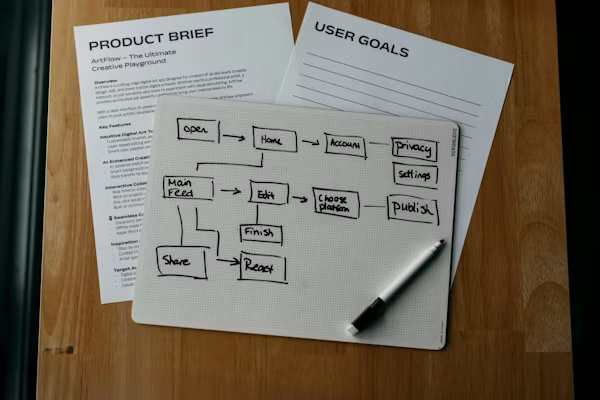
Layer 1: The Founder’s Brain (Offline Organization)
Your digital tool should be an extension of your natural habits, not a complete re-wiring of your personality. Think about how the main organizer in your business handles information when the computer is off. I’ve identified six ways people organize offline, and they dictate your digital fit:
- The Bullet Journaler / Scrapbooker: If you’re someone who rewrites their to-do list every day or loves a physical planner with custom layouts, you need a “loosey-goosey” environment. Notion is your digital bullet journal.
- The “Gadgets & Gizmos” Collector: Do you love having every tool visible on your desk? Do you want to see the gears turning? ClickUp was built for your brain.
- The Stable Minimalist: If you want the simplicity of Apple Notes—just a list that doesn’t move or change—you’re a “Gateway Drug” candidate. Asana or Todoist will feel like home.
Layer 2: The Revenue Model Filter
Being a productive individual is a hobby; being a productive team is a business. Your software must align with how your organization generates value.
- Custom Services (The Snowflake Model): You sell bespoke solutions where every proposal is a little different. You need a tool that handles documentation as well as tasks.
- Productized Services (The Assembly Line): The deliverables are 90% the same every time with small tweaks. You need a tool with rigid dependencies and heavy automation.
- Fixed Inventory (The Physical Product): You need to order materials and track parts. You need a database-first tool like SmartSuite.
- Infinite Inventory (The IP Model): You sell information or access. Your tool needs to be a relational library.
The “Aha” Moment: If you are a Bullet Journaler running a Custom Service business, Notion is practically a requirement. If you’re a Gadget-lover running a Productized Service, ClickUp is your only hope. When you force a “Scrapbooker” into a “Rigid Automation” tool, they won’t just be less productive—they will feel imprisoned by the software.
2. The “Burn Test”: Project Management Software 2026 Comparison
Most reviews give everyone a participation trophy. I won’t. In my experience, some of these tools are living off past glory, while others are innovative but borderline broken. Here is the brutal truth.
Asana: The “Kardashians” of Task Management
Asana is famous for being famous. It’s the legacy player that everyone knows because they’ve been around forever.
- The Gateway Drug: It is the perfect entry point for technophobes. If you like a physical planner and a simple to-do list, Asana is your “gateway drug” into digital project management. It’s clean, it’s intuitive, and it doesn’t try to reinvent the wheel.
- The Boring Truth: On innovation, it’s a 1/3. They haven’t really changed much in years, and honestly, they don’t seem to care. It’s uninspiring and, frankly, a bit boring. But for a team that values stability over “shiny object syndrome,” that lack of change is actually a feature.
- The Verdict: It’s “stable.” If you want a tool that looks exactly the same today as it will in three years, this is it. But don’t expect it to handle advanced reporting or complex data without feeling like you’re hitting a brick wall.
Basecamp: The “Nostalgic” Opinionated Grandfather
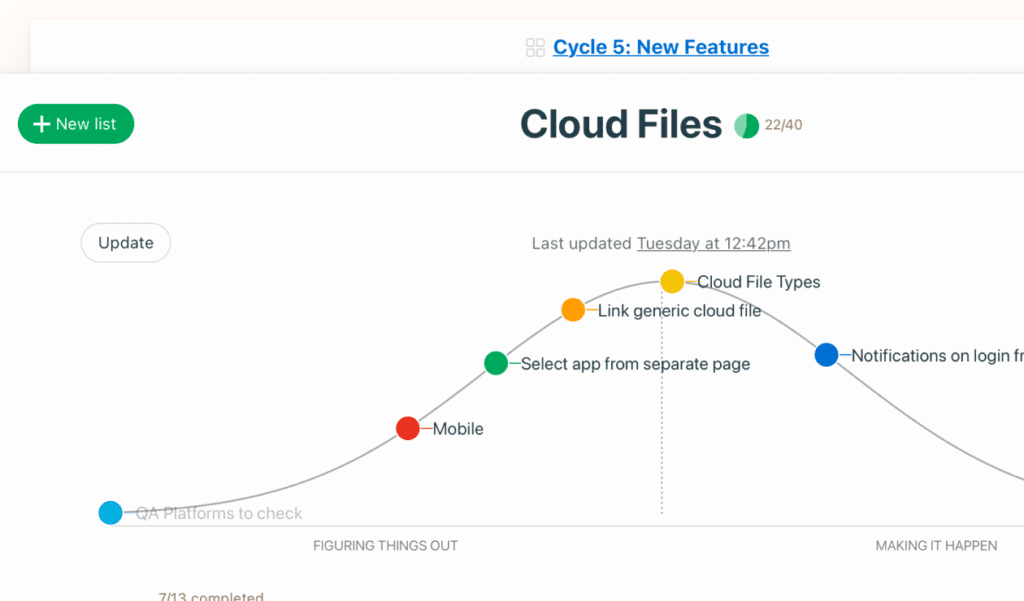
Logging into Basecamp feels like traveling back in time. It has a boxy, old-school interface that feels like the early 2000s—and that’s exactly why people love it. They don’t follow the pack; instead, they double down on Basecamp’s radical philosophy of intentional under-design, refusing to add features that create mental clutter. They don’t care what ClickUp or Monday are doing; they focus on unique tools like Hill Charts that respect how humans actually track progress.
- Dancer to Their Own Beat: Unlike the “copycat factories” of other software, Basecamp is highly opinionated. They don’t care what ClickUp or Monday are doing. They include weird, unique features like “Hill Charts” that you won’t find anywhere else.
- The Flat-Price Revolution: Their pricing is ridiculous in the best way possible—a flat fee regardless of how many users you have. For a growing agency, this is a massive value add that the “per-user” giants can’t touch.
ClickUp: The “Russian Doll” of Gadgets and Gizmos
ClickUp is a love-it-or-hate-it aesthetic. It’s built on a ‘Russian Doll’ structure where everything stacks inside something else, showing you all your tools in one giant, overwhelming box. This design choice often leads to the inherent friction of the “everything app” strategy, where users often report that the sheer volume of features can actually paralyze a team. It’s a 3/3 on innovation, but let’s be real: many of those features are half-baked and buggy.
- Half-Baked Innovation: They release new “ClickApps” all the freaking time. It’s a 3/3 on innovation, but let’s be real: many of those features are half-baked and buggy.
- The Mouse-Free Life: For the hardcore nerds, the ability to do almost everything via keyboard commands is a dream. You can slice and dice information to see your marketing next to your ops next to your customers in ways most tools can’t handle.
- The Verdict: It’s a tool for “Project Builders.” If your team is patient and tech-savvy, the learning curve is worth it. If they aren’t, this tool will make them break out in hives.
3. The Modern Contenders: Monday, Notion, and SmartSuite
Monday.com: The “Grown-Up Cousin” (Stable and Expensive)
If you are looking for the most polished Project Management Software 2026 option, Monday.com is the upmarket choice. It’s what happens when you take the power of ClickUp ClickUp but strip away the chaos to make it “corporate-ready.”
- Out-of-the-Box Success: While other tools give you templates, Monday sells you finished products for CRM or Marketing that work on day one. It’s beautiful, minimalist, and hides the complexity from the user.
- The Price of Boring: It is the most expensive tool on this list. It’s the safe, boring bet for large teams that need security, permissions, and compliance without having to build the system themselves.
Notion: The “Scrapbook” for the Relational Revolution
Notion took the concept of a relational database—something usually reserved for complex CRMs—and made it accessible to students and creators.
- The Aesthetic King: It feels like a digital scrapbook. You can drag and drop, add pretty headers, and build a workspace that actually feels like yours.
- The “Loosey-Goosey” Danger: Because it’s so flexible, teams often accidentally delete databases or create a mess where everyone is doing things their own way. It requires a lot of discipline to stop it from becoming a digital junkyard.

SmartSuite: The New Kid on the Block
Positioned somewhere between ClickUp and Monday, SmartSuite is the disruptor focusing on “Data Schema.”
- The Database Powerhouse: If you’re managing massive inventories or need complex formulas, this is the tool. It marries the flexibility of Airtable with the project management of Monday.
- The “Watch Out” Factor: They are early in their growth curve. I expect their prices to rise as they chase the corporate enterprise crowd. If you want to lock in a deal, move now before they become as expensive as Monday.
4. The Final Scorecard: Trello, Todoist, and the “Jira” Reality
We can’t talk about simplicity without mentioning the OGs.
- Todoist: It’s essentially a prettier Asana with fewer features. It’s a “task manager,” not a “work manager.” Great for individuals, but it gets annoying for teams with complex dependencies.
- Trello: The king of the visual Kanban card. It’s been around forever, and its “Power-Ups” ecosystem lets you bolt on extra features.
- The Jira Shadow: When you sign up for Trello now, Atlassian (the owners) tries to shove you toward Jira. But here’s the truth: Trello is as loved as Jira is hated. Nobody loves Jira, but everyone has a warm place in their heart for Trello’s simplicity.
Performance Comparison Matrix
| Software | Innovation | Ease of Use | Why They Are Famous | The “Sassy” Truth |
| Asana | 1/3 | 3/3 | Being the “Standard” | The Kardashians of software. Famous for being famous. |
| Basecamp | 2/3 | 2/3 | Opinionated minimalism | A nostalgic time capsule that dances to its own beat. |
| ClickUp | 3/3 | 1/3 | “All-in-one” features | A Russian Doll of features—powerful but buggy as hell. |
| Monday | 1/3 | 3/3 | Corporate stability | The expensive “Grown-up Cousin.” Stable and boring. |
| Notion | 3/3 | 1/3 | Relational Databases | A digital scrapbook that can easily become a mess. |
| SmartSuite | 3/3 | 2/3 | Data Integrity | The disruptor. Great for data, bad for hotkeys. |
| Trello | 1/3 | 3/3 | Kanban Cards | Visual and simple, despite Atlassian pushing Jira. |
The “Battle-Scarred” Takeaway: Stop looking for the “perfect” tool. It doesn’t exist. Pick the one that matches the friction your team is willing to handle. If you hate complexity, buy the boring tool. If you need power, embrace the bugs. Just don’t expect a piece of software to fix a broken business process.
5. The Verdict: Choose Your Fighter (The TechnoNextGen Stack)
After seeing thousands of teams try to automate chaos, I can tell you that the “perfect all-in-one tool” is a myth sold by marketing departments. High-performance teams don’t look for a miracle app; they build a strategic Project Management Software 2026 stack that respects the different ways their people actually work.
If you want to stop the “software musical chairs” and actually lock in a system, here is my definitive advice based on the two layers we discussed:
- For the Creative Agency or Consultancy: Your lifeblood is documentation and bespoke ideas. You need Notion for your “Digital Brain” (client portals, wikis, and SOPs) paired with a simple task manager like Todoist or Asana for the daily grind. Don’t force your creatives into a rigid grid; they will revolt and go back to physical notebooks.
- For the Scalable Startup or Software House: You are constantly shipping new updates and need granular control. Embrace the chaos of ClickUp. Deal with the “half-baked” bugs in exchange for the sheer power of keyboard commands, sprint points, and infinite views that allow you to see your marketing and ops side-by-side.
- For the Data-Heavy Operation: If you are tracking physical inventory, thousands of orders, or complex formulas, stop trying to make a to-do list do a database’s job. Go with SmartSuite. It is the most rigid on this list, but that rigidity is exactly what keeps your data from blowing up as you scale.
- For the Corporate Team with a Budget: Buy Monday.com. You’re paying for the “pre-built” luxury and the peace of mind that comes with enterprise-level security. It’s the most expensive, but in the corporate world, “boring and stable” is a high-ROI investment that saves hours of configuration.
The Truth Nobody Wants to Hear
Here is the final “battle scar” I’ll share: Software will not fix a broken business.
If your processes are a mess on a whiteboard or a disaster in a physical notebook, moving to ClickUp or Monday will only make you fail faster and more expensively. These tools are multipliers. They multiply your current efficiency—or your current chaos.
Before you drop $500 a month on a “Pro” plan, go back to your biology. Does your chosen Project Management Software 2026 match how your brain organizes information offline? If yes, lock it in and stop looking at other shiny tools. The best software is the one your team actually uses without complaining.